Neighbourhood Readiness
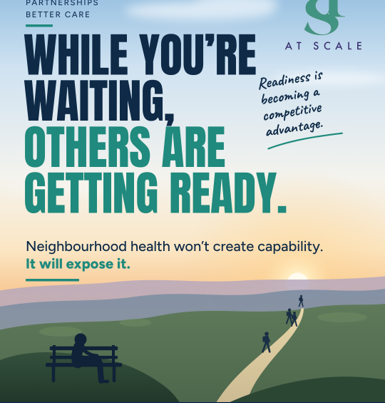
Over the past few months, I’ve found myself having variations of the same conversation with practices, PCNs and federations across the country. Waiting is a Strategy. Just not usually a good one.
The underlying question is remarkably consistent: what does neighbourhood health mean in practice, and what should we be doing while we wait for more clarity?
It is a fair question. Consultations have raised as many questions as answers, and most people are trying to piece together a picture from policy documents, webinars, conferences and informed speculation. Against that backdrop, sitting tight until the picture becomes clearer can feel entirely reasonable.
The thing that nags away at me is that waiting is not a neutral act. It may feel neutral because nothing visible is happening, but organisations are still moving, just in different directions and at different speeds.
Good governance, assurance and contract readiness.
Some are using this period to strengthen the basics. They are improving governance, investing in leadership, understanding their workforce, building partnerships and creating clearer ways of monitoring delivery and performance. They are not doing this because they know exactly what future neighbourhood arrangements will look like. They are doing it because these capabilities will matter whatever the final model becomes.
Others are conserving energy until there is greater certainty. That may prove reasonable, but it carries a risk. NHS opportunities rarely arrive on a level playing field. By the time a new contract, programme or delivery model appears, views have often formed about which organisations look capable, credible and ready. The danger is not that somebody suddenly takes your place. It is that, while you wait for certainty, somebody else quietly becomes the obvious choice.
Interestingly, the organisations making progress are not always the largest or best funded. They are often simply asking themselves better questions. Are our decision-making structures clear? Do people understand their responsibilities? Where are we too dependent on key individuals? What would prevent us operating at greater scale?
None of this is glamorous, but these foundations often determine whether an organisation is trusted with greater responsibility.
Neighbourhood health won’t wait until we develop our strategies. It is unlikely to create capability from nowhere. More often, it will expose the capability that already exists. When commissioners, partners and system leaders look for organisations that can lead, coordinate or deliver at scale, they will not start with a blank sheet. They will look around and ask: who already appears ready?
That is the uncomfortable bit. Being part of the landscape for years does not guarantee a place in what comes next. Trusts, community providers, federations, collaboratives and newer partnerships are all considering the same opportunities. Many are strengthening leadership, improving governance, building delivery infrastructure and becoming clearer about the role they want to play. They are positioning themselves, so they are difficult to exclude.
There is a quiet competition underway. Organisations are building relationships, establishing track records and demonstrating credibility. The gap between those preparing and those waiting may not look significant today, but it could become visible very quickly once opportunities emerge.
Nobody knows exactly how neighbourhood health will unfold. The organisations that benefit most may not be those that predict the future accurately. They may simply be those that recognise readiness itself has become a competitive advantage.
The future is not fixed, and there is still time to prepare. The real question is whether your organisation will be seen as still working out where it fits or already helping to shape what comes next.
Are you looking to strengthen your GP Federations readiness for the new health landscape? Come and have a chat , drop me a line mike.gill@atscale.co.uk or info@atscale.co.uk
www.atscale.co.uk